 What’s better than starting your very own container garden with fresh organic herbs and veggies?
Starting one for FREE!
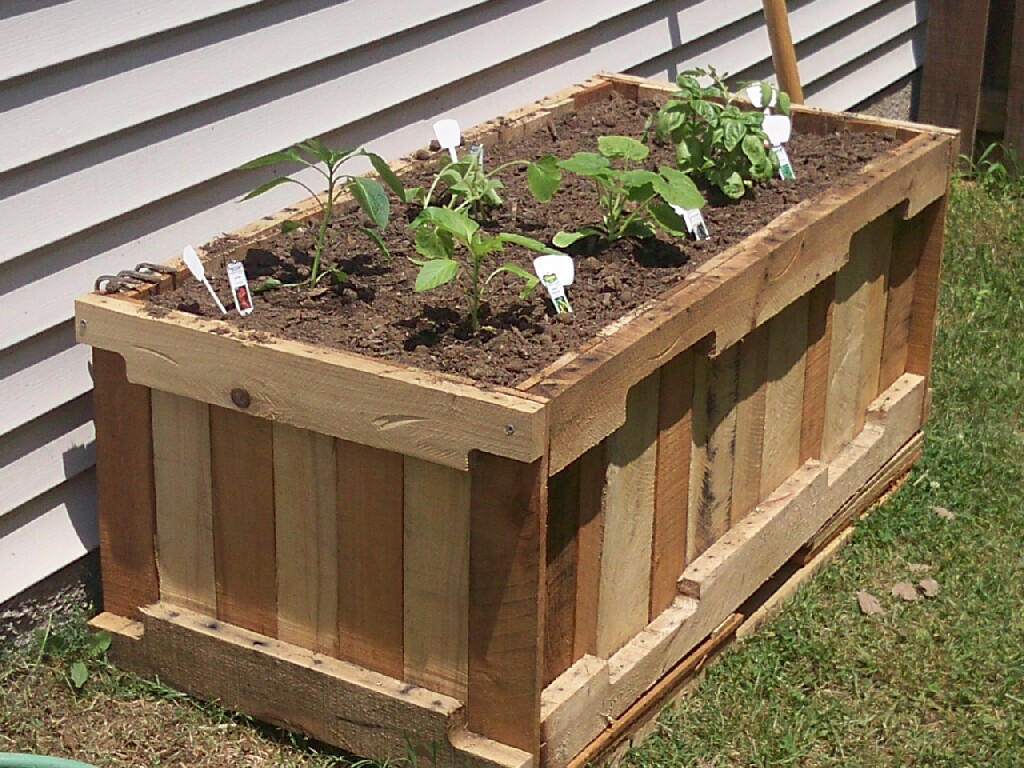
This picture is an actual photo of the container garden I made out of reclaimed shipping pallets.
And I’m going to show you how to make one too…
So you think it’s too late to get started on a container garden?
Wrong.
Lots of herbs and vegetables can be planted through late summer, you just have to know which ones.
I got my container garden built and planted about 3 weeks ago.
I wanted to go all organic with my garden, so I planted a variety of Bonnie plants that I found at my local Home Depot.
Unfortunately, the pickings were slim as far as the organic Bonnie plants went, but that’s probably because I was getting quite a late start on this new garden.
Building A Garden Planter From Reclaimed Pallets
For this container I more or less followed these Instructable instructions that I showed you last month in 3 Free Container Garden Plans Using Reclaimed Pallets.
“No Nail Pulling Required”
One of the biggest hassles of working with reclaimed pallets is breaking them down. They’re usually nailed together with nails that have screw-like thread on the end, and the thin planks splinter when you attempt to pry them out.
This particular plan was touted as the “no nail pull method”… but was it really?
Yes, for awhile.
Since I don’t have a table saw, I bought a $6 carbide blade for my circular saw to cut through the nails, which worked great until I dulled it completely about halfway through the project. Luckily, the blade was still sharp enough to cut off the slats, just not cut through the stubborn nails.
No problem, all I had to do was hammer them back into the support pieces (which are the pieces you can see at the top and bottom of each side of the planter).
Building Your Own
Simply follow the instructions in the Instructable above and you’ll be ready to plant in no time.
It took me about 3 hours to construct mine — and most of that was spent in the breakdown process.
True, a table saw will make the job much easier, but you can use a circular saw as I did if you don’t have one.
NOTE: Always be sure to salvage non-pressure treated pallets if you plan on turning them into a container for planting. Pressure treated lumber will leach the chemicals used to treat it into your dirt and hence, your veggies.
UPDATE: See how I changed things a bit when I made another container garden from shipping pallets the following year.