| 0 | 11 Comments
| More

Jeffrey

Cloth Diapers VS Disposable Diapers

disposable-toxic-diapers.jpgHow green (or sanitary) could it be to throw a big ole' hunk of feces in your washing machine?

It's true, there are many ways to live green that just don't fit into daily life...and that's the #1 reason I hear of why people don't make any attempts to go green.

For some reason, there has been lots of convo about diapers in the green world recently, so which is more green, disposable diapers or cloth ones? Could one (or both) of them even be toxic?

The Argument:
The Cloth Side - PunkinButt.com says,

"To acquire the wood pulp used to produce disposable diapers, one billion trees world-wide are cut down per year, but what is done to that wood is even more detrimental to us and our world. The wood pulp is bleached with chlorine gas, producing toxic chemicals known as organochlorines. The most notorious of which is dioxin, and happens to be one of the most toxic substances ever made by humans. Dioxin is associated with birth defects, miscarriages, cancer, genetic damage -- remember Agent Orange from the Vietnam War? One of the primary components of Agent Orange was dioxin. Organochlorines are found in large amounts in the waste water released from manufacturing plants into the environment. Employees in factories manufacturing super-absorbent diapers have reported fatigue, female-organ problems, slow-healing wounds and weight loss. There is even a trace amount of organochlorines in each disposable diaper. Many countries have banned the process of chlorine bleaching from the manufacture of disposable diapers, in favor of safer bleaching processes, such as hydrogen-peroxide bleaching."

The Disposable Side -
Advocates of disposable diapers are, well, not involved in the green conversation...that's for sure.

However, the main ingredient for reusable cloth diapers is cotton. Cotton is an EXTREMELY water intensive crop and is quite often treated with large amounts of pesticides and chemicals, and often being bleached to make them nice and white.

One must also consider the impact of having to wash the cloth diapers before reuse.

My Questions:
I, for one, wonder about the level of sanitation that results from putting soiled cloth diapers into the wash. Would the toxins from that waste remain and contaminate future loads of clothing?

The Solution:
For those of us, like myself, who feel that living green needs to be fun, simple, and fit into our daily lives, there is a solution to the diaper debate.

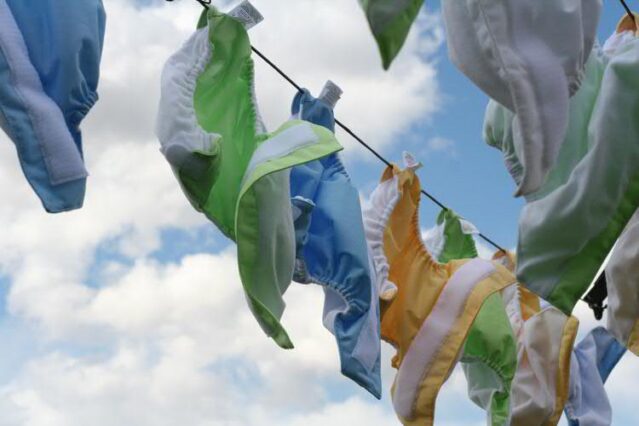
There is a new type of diaper to hit the market that consist of a colorful outer diaper that houses a disposable, flushable, biodegradable insert that can be changed.

Two such companies that are receiving rave reviews are gDiapers and 7th Generation.

green-waves.jpgCheck out Sally Kalson of the Pittsburgh Post-Gazette's review of gDiapers.

TreeHugger.com also reviewed them here.

Would you consider using cloth diapers on your next (or 1st) child? What about the new diapers from 7th Generation or gDiapers?


11 Comments

Paige

I think gDiapers sound great. But they are so expensive is thier another alternative?

There’s a big flap over nappies (translation-diapers) in Britain these days. Apparently the British government spent the £50,000 to determine whether cloth diapers or plastic disposable diapers are worse for the environment. And then, according to news reports, it didn’t like what it found.

The Times online reports: “The report found that using washable nappies, hailed by councils throughout Britain as a key way of saving the planet, have a higher carbon footprint than their disposable equivalents unless parents adopt an extreme approach to laundering them.”

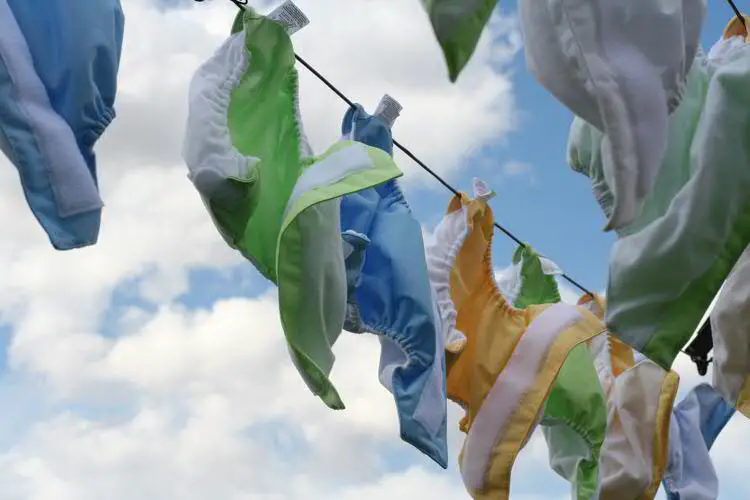
“To reduce the impact of cloth nappies on climate change parents would have to hang wet nappies out to dry all year round, keep them for years for use on younger children, and make sure the water in their washing machines does not exceed 60C.”

“The conclusions will upset proponents of real nappies who have claimed they can help save the planet.” “Restricted Whitehall documents, seen by The Sunday Times, show that the government is so concerned by the ‘negative laundry options’ outlined in the report, it has told its media managers not to give its conclusions any publicity.”

Vashra

Actually - cotton is usually one of the most economical crops grown in the US. It really doesn't require much more in the way of water than the southeast gets annually, and it requires *minimal* pesticides because past its tender shoot stage most bugs just aren't that interested in it.

Most of the reports that say cotton requires all that extra care were skewed by focusing on data from countries that take environmentally unsound steps to grow it in areas that don't naturally support it.

Sara

I'm using cloth diapers on my second baby and believe that they are much better for the environment. I wonder how many people who object to the use of cotton diapers because of its high water and pesticide usage are really buying organic cotton t-shirts, sheets, underwear, socks, towels . . . Come on folks!

I've used both cloth and disposables and poop flies out of the the disposables all the freaking time. I guess I should throw my kids' clothes out because its so "unsanitary".

Honestly, cloth diapering was really easy when I just had one in diapers. I don't do it full time now with two in diapers. One advantage is that its so much cheaper in the long run.

As for the impact of cotton, your argument assumes that we are using conventional cotton. I have a number of organically grown unbleached cotton diapers as well as some organic unbleached hemp diapers. I have several kinds of fancy diapers that make things really easy, but I also have some old fashioned Chinese prefolds which are not only great for diapering, but can be reused long after baby is grown for cleaning cloths and soaking up spills (they're so absorbant).

Honestly I'm kind of annoyed at this whole post. How green is it to put feces in the washer? Give me a break. Its going into the sewer to be treated like it should be. How green is it to put feces in the landfill? That's the question you ought to be asking.

My energy star washer has an extra sanitary cycle which heats up the water hot enough to kill just about anything with an internal water heater. But even when I didn't have such a fancy washer, my children survived without getting any strange diseases from their diapers.

Claire

I'm a first time to-be-mom and found gDiapers to be the most appealing for my lifestyle and the planet. I like the idea of being able to compost the insert, and the flexibility to either flush or toss without having to worry about it sticking in a landfill for 500+ years. I've thought about Fuzzi Bunz for their one-sizeness but haven't embraced the idea of dealing with baby-pooped by-product.

The closest I'll get to a disposable is a 7th Gen, which seems to be the lesser of evils in the disposable world.

Steve Gratton

Disposable are better for the child and (if you care about such things) have a smaller carbon footprint than cloth diapers. The manufacturing process is much more efficient and less resources are used in the entire life cycle of a child's years in diapers with disposable vs. cloth. No true "believer" would suggest cloth over disposable. However, cloth diapers are excellent for washing your car and dusting your furniture.

http://www.doodlebuckets.com/store/cloth-diapers-c-16.html You still have to deal with throwaways with the g-diapers. Better to go the cloth route, in my opinion.

Oops, I misread. I see you were asking about contaminating the washing machine itself. Studies have shown that rinsed cloth diapers don't pose any higher risk in a hot water washing machine than normal underwear or other children's clothing. (No matter what diapering method you use, there is often...ahem..spillover.)

I have used both cloth and disposable on my babies. The eco-diapers sound great.

To correct one misconception, though: the "toxins" from diaper laundry water are no different from the "toxins" you leave in the toilet. (Ha!) In fact, most cloth diapering parents flush any solids down the toilet before laundering diapers. Both washing machine and toilet wastewater go into our city's sewage system and are treated accordingly.

Parents who use cloth diapers rarely use chlorine bleach because it breaks down the cotton fibers too much. Using safer non-chlorine bleaches and/or line drying in the sun has a good--but less toxic--result. Also, passing down the diapers from one baby to the next helps mitigate some of the manufacturing and growing concerns of cotton.

Thanks for the shout out for gDiapers. I am one of the founders.
Get in touch if you want to talk more!

Cheers

Jason
dad/ CEO
gDiapers

Leave a comment

Signing in is easy! Especially if you use OpenID or one of these networks:

Movable Type OpenID Vox TypePad Yahoo AIM Facebook WordPress.com
what will you say?

(You may use HTML tags for style)

Recent Comments